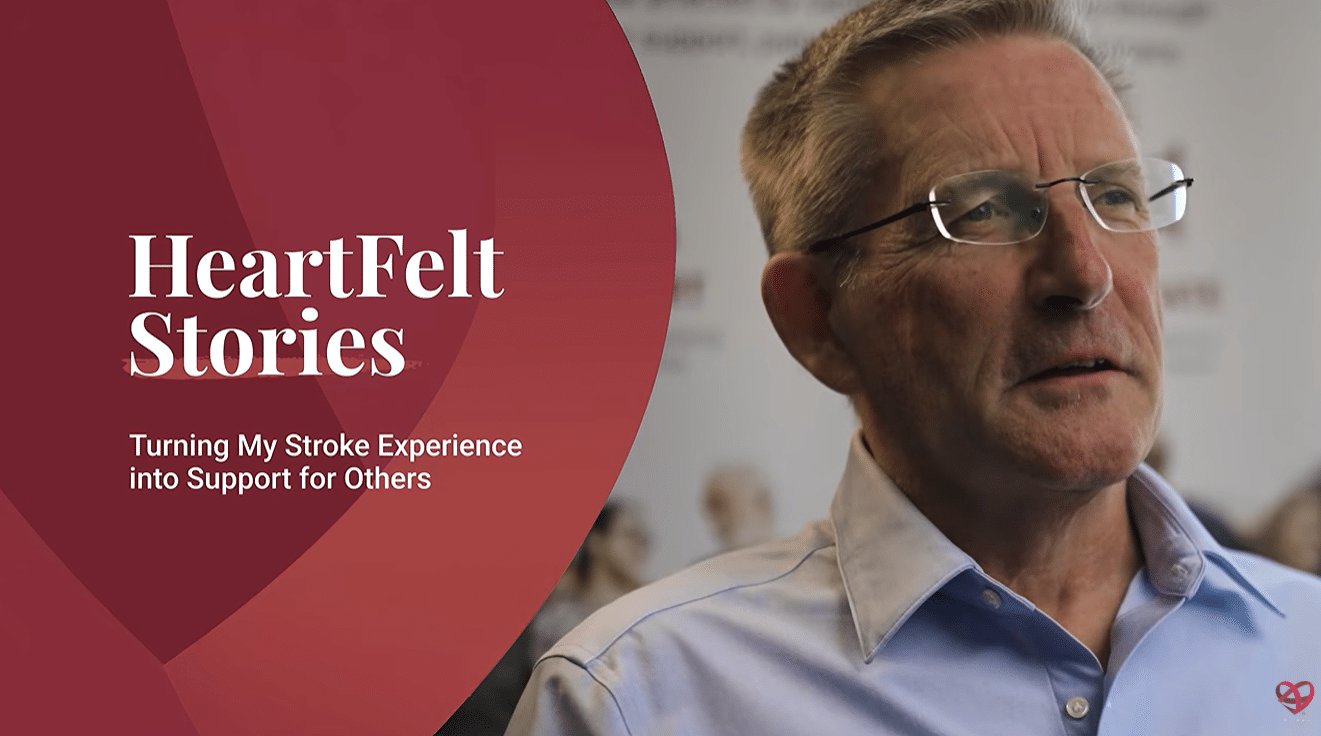
My Story
I had all of the characteristics of somebody that might have a stroke or have a cardiovascular event. I was overweight, had high cholesterol and very high blood pressure. I was very much aware of all of these things, but chose to do nothing about it. Everything that the doctor told me for probably 20 years before I had my strokes, I ignored.
Three years ago, I was walking down the street when everything just started to go very, very strange. I had a stroke. Two people walking their dogs found me, and I was taken to hospital. Four days later, I was back home. Three days after that, I had a second stroke, except there was nobody around because I was literally home alone. It was somewhere between nine and 11 hours before the police, fire brigade and ambulance people broke the door down and found me unconscious on the floor.
Losing my independence
I’ve always been a very independent person. The most difficult part in the first instance was the lack of personal agency that I had. I was no longer in control of the things that were important to me. I was no longer in control of my body and certainly not in control of my mind. I was having to rely upon other people to do things for me and make decisions for me that I’d never experienced as an adult. And I didn’t have a purpose either.
When you have a stroke, you’ve got a brain injury. The brain is working really hard to try and recover its functions, at the same time trying to deal with all of the emotional baggage that comes with a stroke. It is an incredibly difficult time for everybody, and I don’t know how you can prepare for that.
Learning to look towards the future
I feel as if I spent the first 18 months mourning what I used to be rather than thinking about what I could be and what abilities I had going forward. It’s only the last 18 months where I’ve been able to get myself into a position where I can recognise that I’ve been very fortunate and I can use that positive energy to think about what I can do in the future.
Life can get better and in my case, I think it did.
"I spent the first 18 months mourning what I used to be rather than thinking about what I could be."
The mental health aspect of recovery
The mental health aspect of it is really interesting and it’s probably under researched. You’ve got a brain injury, your brain is trying to repair whatever bits of the brain have gone wrong. At the same time, you’ve got this enormous feeling of fatigue, which is something that every stroke survivor talks about. You’re constantly tired.
It tends to be the case that you look at the physical aspects of people. All the cognitive stuff in terms of memory, comprehension and speech, very little focus at all is on the mental aspect or mental health aspect of it. Perhaps that’s something that needs to be looked at in terms of healthcare.
The importance of peer-to-peer support
For me, that’s been one of the most significant aspects of my recovery: the idea that I can take my experiences and use those experiences to try and help other people. Patient voice is so important. For the people who are involved in it, it gives them agency and purpose. And for the people who are responding to the peer-to-peer support, people listen to patients, listen to people who have had the same experiences as they’ve had, much more so than they’ll ever listen to a doctor.
Helping others has become the most important part of my recovery and of my journey going forwards. You can’t talk about lived experience unless you’ve been through whatever the experiences are that you’re talking about. So it’s not a skill that I would recommend that people have, but if you’ve got it, I think you should use it.
"People listen to patients, listen to people who have had the same experiences as they've had, much more so than they'll ever listen to a doctor."
Never give up
The message for somebody who’s just experienced a stroke is it’s not the end of your life. You can recover from this, I think, with the right support. And that includes lived experience. It includes peer-to-peer support.
The key message is never to give up. Don’t ever believe that there’s a narrow window of opportunity in terms of recovery. Listen to people with lived experience, join a peer-to-peer support group, get involved in organisations like Mended Hearts Europe. And from that, you’ll benefit other people, but you’ll, most importantly, benefit yourself.
Resources

Living with Atrial Fibrillation Discussion Guide – Spanish

A Patient’s Journey After a Stroke – Spanish
