Women’s Health Can No Longer Be an Afterthought

Key Takeaways from the Cardio-Kidney-Metabolic Policy Forum
25 June 2026  |  By Mended Hearts Europe

Share this story

On 21 May 2026, alongside the 79th World Health Assembly in Geneva, healthcare professionals, patient advocates, policymakers, researchers, and global health leaders gathered for the Cardio-Kidney-Metabolic (CKM) Policy Forum titled “Addressing the Disproportionate Impact of CKM Conditions on Women’s Wellness.”

Convened by the Global Alliance for Patient Access (GAfPA) and Mended Hearts Europe, in partnership with the Global Patient Alliance for Kidney Health (GloPAKH), the Partnership to Advance Cardiovascular Health (PACH), the International Atherosclerosis Society (IAS), and the Partnership for Women’s Wellness, the forum explored how cardiovascular, kidney, and metabolic conditions continue to disproportionately affect women — often through delayed diagnosis, fragmented care pathways, and healthcare systems that still fail to recognize symptoms early enough.

The discussions made one thing clear: women’s health can no longer remain at the margins of CKM and non-communicable disease (NCD) policy discussions.

"The discussions made one thing clear: women’s health can no longer remain at the margins of CKM and non-communicable disease (NCD) policy discussions."
Healthcare experts and advocates participating in a panel discussion at the Cardio-Kidney Metabolic Policy Forum.

Why This Conversation Matters

Cardiovascular disease remains the leading cause of death among women globally, while chronic kidney disease affects more women than men worldwide. Yet women continue to experience delays in diagnosis, are more likely to have symptoms dismissed, and often navigate fragmented systems where cardiovascular, kidney, and metabolic conditions are treated separately rather than as interconnected diseases.

Throughout the forum, speakers repeatedly emphasized that these outcomes are not inevitable. They reflect structural gaps in healthcare systems, research, prevention strategies, and policy implementation.

The event also highlighted the growing recognition of integrated CKM care at a global level, following the adoption of the first-ever WHO Resolution on Kidney Health and ongoing international discussions around NCD prevention and management.

Centering Lived Experience

A major focus of the forum was ensuring that women living with CKM conditions remained at the center of the conversation.

The lived experience panel brought together Antonia King (CompCure/GloPAKH), Nicole McKelvie (Heart Failure Warriors NI), and Hyvelle Ferguson-Davis (Heart Sistas), who shared deeply personal experiences navigating kidney disease, heart failure, diabetes, stroke, and cardiovascular care.


The discussion explored themes that resonated throughout the event:

  • delayed and missed diagnoses,
  • fragmented care pathways,
  • the emotional and financial burden of chronic disease,
  • the lack of coordinated care across specialties,
  • and the need for healthcare systems to better recognize how CKM conditions present differently in women.

Several speakers highlighted that women are still too often underdiagnosed, unheard, or treated too late.

"“When she speaks, listen and act. Delayed diagnosis in women must end. Women’s health can no longer be treated as an afterthought, especially for women of color, who have too often been ignored, dismissed, and denied care. We know the outcomes, and the cost of inaction is simply too high.” — Hyvelle"

The conversations also reinforced the importance of recognizing patients not only as recipients of care, but as experts through lived experience whose perspectives must help shape healthcare systems and policy decisions.

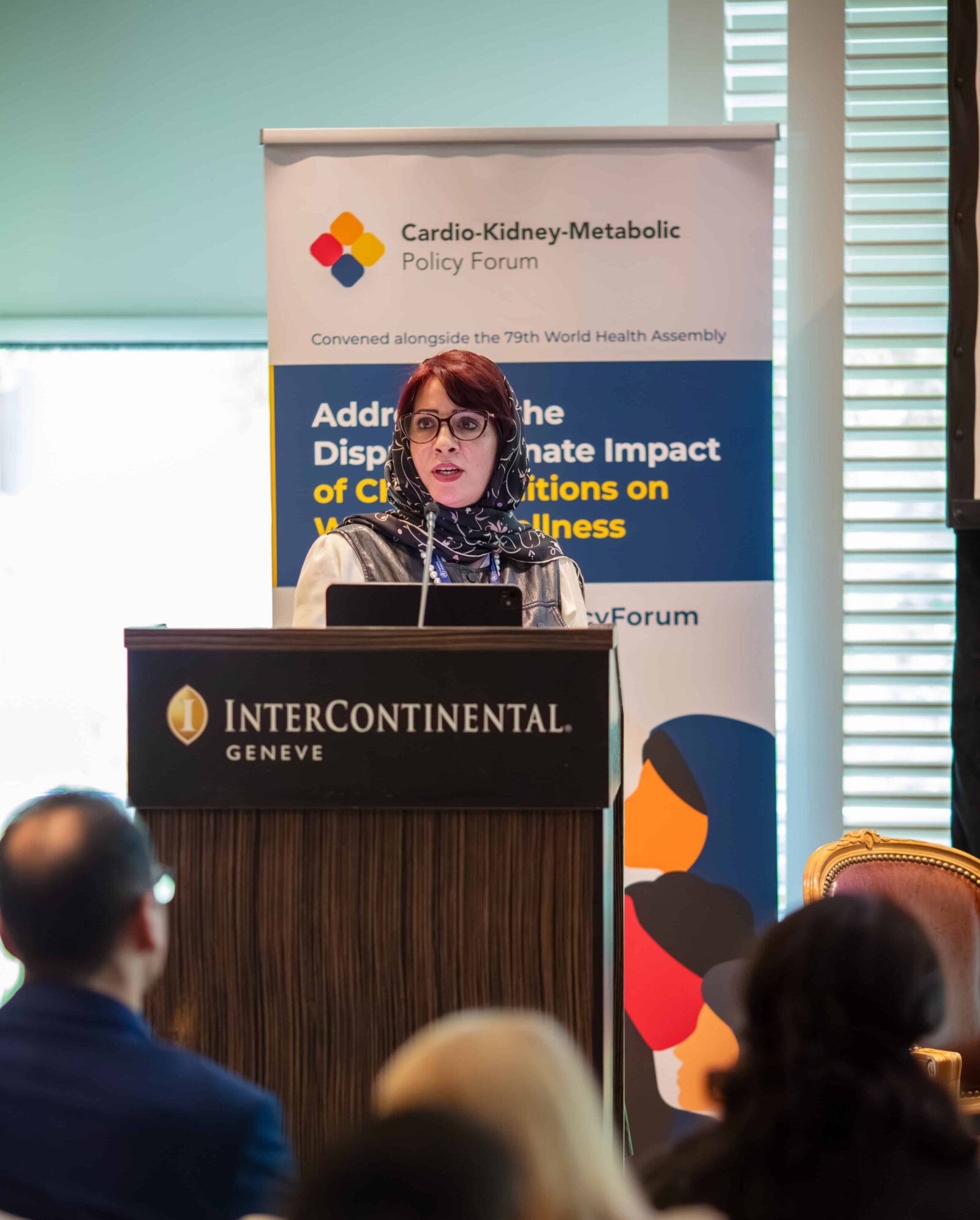
Woman speaking at a podium during the Cardio-Kidney-Metabolic Policy Forum

Moving Toward Earlier and More Integrated Care

Across both the patient and healthcare provider discussions, several priorities emerged consistently:

  • earlier and coordinated screening,
  • improved recognition of CKM risks in women,
  • stronger integration between cardiovascular, kidney, metabolic, and primary care services,
  • better use of sex-disaggregated data,
  • and more gender-sensitive healthcare pathways.

Speakers emphasized that many women continue to move between specialists without truly coordinated care, often repeating tests and facing long delays before receiving appropriate treatment. The need for more connected, multidisciplinary approaches was a recurring theme throughout the day.

The forum also highlighted the importance of viewing women’s health through a broader lens — one that includes not only healthcare delivery, but also equity, social determinants of health, caregiving responsibilities, and long-term prevention strategies.

From Dialogue to Action

As the forum concluded, participants emphasized that awareness alone is no longer enough. The challenge moving forward is turning discussion into measurable action that improves outcomes for women living with CKM conditions.

The event ended with a strong call for:

  • earlier detection,
  • more connected healthcare systems,
  • stronger collaboration across disciplines,
  • meaningful patient involvement,
  • and policies that place women’s wellness at the center of CKM and NCD strategies.

The conversations held in Geneva reinforced that addressing cardiovascular, kidney, and metabolic conditions in women requires coordinated action across healthcare systems, advocacy, research, and policy.

Watch the Full Discussion

More reading

Travelling Safely with a Heart Condition This Summer

25 June 2026 | By Mended Hearts Europe

Your Voice Can Help Shape the Future of Heart Care

25 June 2026 | By Mended Hearts Europe
Hypertension

The Vulnerable Period After Hospitalisation: Why Blood Pressure Matters So Much

25 June 2026 | By Mended Hearts Europe

Join Our HeartFelt Community

Join a growing network of people affected by cardiovascular conditions sharing their stories and experiences